
Pride in its original meaning is to be useful or brave, and it has come to mean feeling good about yourself, that you matter. For many LGBTQ+ people that I see as a depth-oriented therapist, feeling genuinely proud doesn’t always come easily. Sadly, years of being told that something is wrong with being queer, trans, or some other hue of the rainbow can take its toll in the shape of chronic shame.
Sometimes celebrations also can be emotionally complicated. Pride season has a way of bringing things to the surface. It can be an occasion to celebrate LGBTQ+ lives and communities. It can also be a reminder that for many of us there is healing work needed to undo old patterns of shame, and that for many people around the world including in parts of the U.S, visibility remains dangerous rather than welcomed.
Speaking at this year’s Los Angeles Pride celebration, West Hollywood Mayor John Heilman reflected on that broader meaning:
“We’re out here not just for us… it’s also important to be out here for those who can’t celebrate Pride in… other places in the world.”
West Hollywood Mayor John Heilman, Los Angeles Pride 2026
He also reminded the crowd that Pride remains a form of protest as well as celebration, especially in light of a current wave of anti-queer and trans policies being implemented around the country:
“We’re here. We’re visible. We aren’t going away.”
West Hollywood Mayor John Heilman, Los Angeles Pride 2026
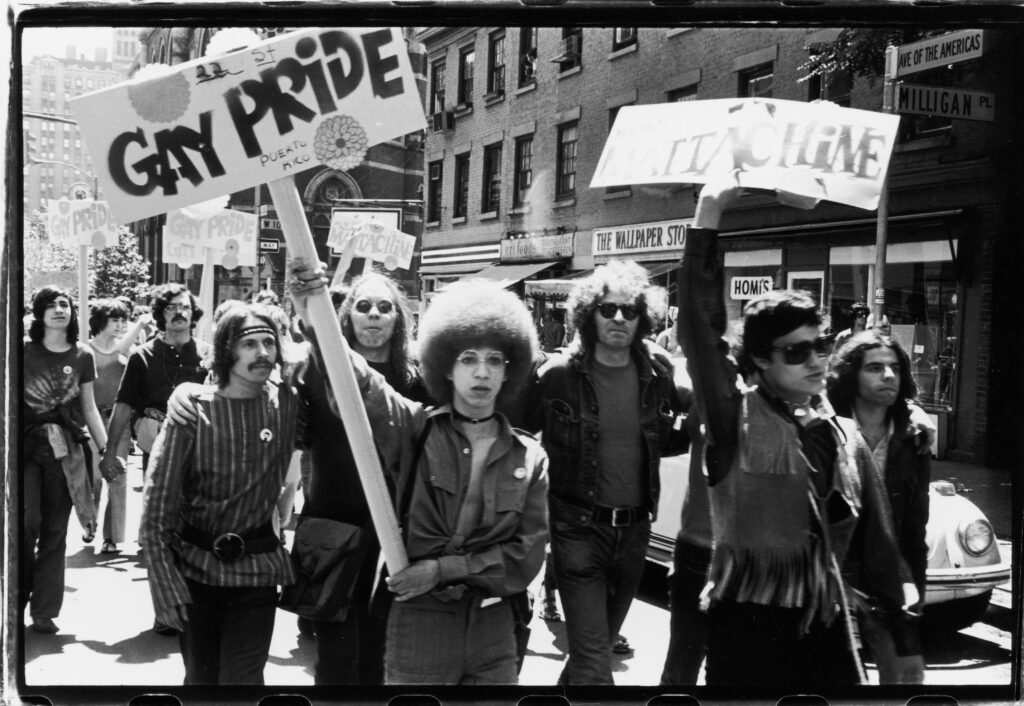
Pride festivals from their inception after the Stonewall uprising of 1969 have always been a form of public affirmation of dignity, community, and resistance.
My First Pride in New York City
The first Pride event I attended was in New York City in the early 1980s. I had never seen anything like it. I was still in the midst of my own coming-out process, and watching speakers take the makeshift stage to deliver passionate calls for gay rights (the whole movement was called gay liberation in those days) left me speechless. This was the beginning of the AIDS epidemic era, and for the first time I heard about the need for community action, research, and empowerment, including through safer sex practices. The force of the speakers and the sense of urgency and solidarity within the community was unmistakable.
The experience stood in sharp contrast to the shame-filled world I had grown up in and still carried inside me. Looking back, that day became one of the breadcrumbs leading me out of that forest of shame. It offered a glimpse of a different relationship to my own queerness, one grounded less in fear and concealment and more in dignity, community, and pride. It also offered encouragement that was literally life-saving at a time when becoming infected with HIV was widely seen as a death sentence.
This memory still shapes the way I think about Pride today.
What I Hear in the Therapy Room About Pride
Alongside the legacy of collective celebration, uplift, and resistance, I also hear in the therapy room another layer of experience that is less publicized and maybe harder to share such as:
“Everyone seemed to be having a good time. I just felt tense and lonely.”
“My partner and I had a great time at Pride. Then I drank too much and spent the next day feeling awful.”
“I don’t go anymore. It’s become too corporate and doesn’t mean much to me now.”
Pride means different things to different people, and that range is wider than it might appear. For many, it remains a genuine source of joy, solidarity, and visibility. A Pride celebration may represent one of the few places where being openly queer, or openly supportive of LGBTQ+ people, still feels relatively safe and affirmed.
Pride can also activate something more complicated. Not always celebration. Sometimes grief. Sometimes loneliness. Sometimes an awkward emotional distance from a community one still deeply values. Sometimes a feeling that the public story of Pride and one’s private experience of being queer are not quite aligned.
Why Pride Can Feel Heavy Even When You Belong
Belonging to a community and feeling connected to it are not the same thing.
Most of us move in and out of that tension over the course of our lives. There are moments when community feels sustaining and moments when it feels distant. Pride can sometimes make that distance harder to ignore.
For many in the community, the history of Pride, as a statement of strength and solidarity, still matters. And now watching the month expand into a major cultural and commercial moment can raise genuine questions about what is being celebrated, and for whom. For others, that same expansion feels like a hard-won sign of progress, evidence that queer lives have become harder to ignore. Both of those responses make sense, and they are not always easy to hold at the same time.
The political backdrop makes this more complicated, not less. In recent years, over 2,000 anti-LGBTQ+ bills across the U.S. have been introduced targeting healthcare access, public restroom usage, and gender markers on legal identification, according to the American Civil Liberties Union.
For many LGBTQ+ people, Pride arrives carrying both its historical meaning and the weight of an ongoing struggle, and the gap between celebration and lived reality can be genuinely disorienting. Even with the intention of community solidarity, for some there may not be enough acknowledgement of the impact of these developments, whether that means worrying about physical safety, the preservation of rights, including the right to free speech and to marry, access to medications, healthcare, and social services, or job security.
Intensified social pressure can also inflame tensions within the community itself. The LGBTQ+ alliance represents tremendous diversity of experience, identity, history, and political perspectives. Under pressure, communities often become more vulnerable to polarization, misunderstanding, and internal conflict. Pride can become a place where those tensions are felt alongside solidarity.
There is also something about celebratory seasons themselves that can deepen loneliness rather than relieve it. Research has consistently found that LGBTQ+ people experience significantly higher rates of loneliness than their peers.¹ When a celebratory season carries an expectation of visible joy and you have not been feeling it, that gap can feel alienating.
For many people, that loneliness is not new. It echoes older experiences of being closeted, feeling different, or trying to perform a version of oneself that felt acceptable to family, peers, or the larger culture.
When Your Relationship With Pride Is Complicated
A question I hear in different forms, sometimes spoken directly, sometimes just beneath the surface, is this:
Why do I feel so disconnected from Pride?
There is no single correct relationship to Pride. You can find the celebrations genuinely energizing and still feel complicated about certain aspects of them. You can feel grateful for increased visibility and also grieve something that feels lost. You can feel joy and loneliness in the same afternoon.
You might feel pressured to perform the joy and dazzle, even when the spirit is not quite there. You might feel anger or grief about something that has changed. You might feel protective of what Pride has become, even as you sense the tension between its origins and its current forms. You might hesitate to speak about any of these reactions for fear of seeming cynical, ungrateful, or simply like a downer.
And so the stage is set for finding ways to check out, party harder, stay distracted, or simply move on.
Yet it may be precisely in the hangover, the loneliness, the quiet conversation afterward, or even the next night’s dreams that something deeper begins to emerge.
Perhaps Pride, in its fullest sense, is an invitation: to find real purpose, to value ourselves more fully, to remember the struggles and teachings of those who came before us, and to deepen our connection to the unique histories, cultures, and lineages that make LGBTQ+ life possible.
That kind of pride may look completely different for each of us, but it touches on an internal resource that is both very personal and also felt widely across the expanse of LGBTQ+ communities. And that is worth tending to.
What Depth-Oriented Therapy Offers When Pride Stirs Up More Than You Expected
From a depth-oriented perspective, feelings, including difficult ones, can be a link to where life gets more real, vivid, and true. Learning from these feelings can be challenging at times, but also can become a pathway to healing. Sometimes what Pride stirs up has less to do with the season itself and more to do with older experiences of belonging, visibility, shame, loss, or longing. A time like this can become a kind of mirror, illuminating aspects of ourselves and our history that are asking for attention.
For some people, Pride evokes memories of exclusion. For others, it brings up questions about aging, partnership, community, class, race, or political identity, or the distance between who they once hoped to become and who they are today. Sometimes what surfaces has very little to do with Pride itself and everything to do with the deeper currents that Pride happens to touch.
Whatever emerges deserves curiosity rather than judgment.
In my therapy practice, which is rooted in years of offering LGBTQ+ affirming care, the goal is not to talk you out of what you are feeling or steer you toward a particular way of seeing Pride. What can help is to have a space to be gently curious about what you may be feeling, or even what you have been dreaming, and discover what might be asking for your attention.
If Pride has brought things to the surface, and you live in California or New York, I’d be glad to talk.
Other Ways to Be in Relationship With Pride
There are many ways to cultivate pride. Community celebrations may genuinely energize and dignify your lived experience as a queer, trans, or allied person. Other possibilities might include:
● Spending time with a small, trusted group of friends and reflecting on your feelings about Pride
● Reading LGBTQ+ history, memoir, or literature in a way that feels meaningful to you
● Creating a ritual, alone or with others, honoring how queerness nourishes your spirit, creativity, and relationships
● Remembering people who symbolize queer and trans courage, resilience, or imagination for you
● Choosing not to engage and trusting that decision
Whatever Pride stirs in you, those feelings are worth taking seriously.
The invitation is simply to notice what Pride brings to the surface. Therapy can offer a place to explore those experiences with curiosity, honesty, and care.
¹ Bruss, K.V., Seth, P., & Zhao, G. (2024). Loneliness, Lack of Social and Emotional Support, and Mental Health Issues — United States, 2022. Morbidity and Mortality Weekly Report, 73(24). Read the study. Note: The CDC has removed numerous pages related to LGBTQ+ health from its website since early 2025, consistent with executive directives from the Trump administration. This study remains accessible via the direct PDF link above and through the NIH/PubMed archive.
